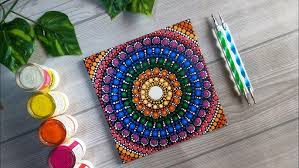
Mandala art is a rich and diverse form of artistic expression that has deep spiritual and cultural significance across various traditions. The term “mandala” comes from the ancient Indian language of Sanskrit and means “circle.” Here’s a detailed look at what mandala art encompasses:
Structure and Design
- Basic Shape: At its core, a mandala is a circular design, which symbolizes unity, wholeness, and infinity. The circle represents the universe and the cyclical nature of life.
- Symmetry and Repetition: Mandalas often feature intricate patterns that radiate outward from the center. These patterns typically exhibit high degrees of symmetry and repetition, creating a harmonious and balanced design.
- Geometry: Mandalas commonly use geometric shapes such as triangles, squares, and circles to create complex patterns. The geometric precision often reflects the ordered nature of the universe.
- Central Focus: Many mandalas have a central focal point or a core symbol that serves as the starting point for the design. This central element often represents the essence of the mandala’s theme or purpose.
Cultural and Spiritual Significance
- Hinduism and Buddhism: In Hindu and Buddhist traditions, mandalas are used as spiritual symbols and tools for meditation. They are often employed in rituals and spiritual practices to represent the cosmos and aid in the journey toward enlightenment.
- Tibetan Buddhism: Tibetan mandalas are intricate and highly detailed, often created as part of elaborate rituals. They are used in various practices, including meditation and visualization exercises. The creation of a mandala is seen as a form of devotion and a way to focus spiritual energy.
- Native American Traditions: Various Native American cultures use mandala-like symbols in their art, often associated with healing, balance, and connection to nature. These designs may appear in items like dreamcatchers or ceremonial objects.
- Other Cultures: Mandalas appear in other cultural and spiritual contexts, such as in Islamic art, where they represent the infinite nature of Allah and are used to enhance spiritual focus.
Modern Uses
- Art Therapy: In contemporary settings, mandalas are frequently used in art therapy to help individuals explore their emotions and foster personal growth. Creating and coloring mandalas can be a meditative and therapeutic activity.
- Decorative Art: Mandalas are also popular in decorative art and design. They appear in various forms such as paintings, sculptures, textiles, and even architecture. Their visually appealing patterns and symbolic meanings make them a favorite in modern interior design and fashion.
- Personal Exploration: Many people create their own mandalas as a form of self-expression and personal exploration. The process of designing and coloring a mandala can be both relaxing and enlightening, helping individuals connect with their inner selves.
Creation Process
- Materials: Mandalas can be created using a variety of materials, including paper, canvas, wood, and digital media. Traditional methods often involve drawing or painting, while modern techniques might include digital design tools.
- Techniques: The process of creating a mandala typically involves drawing the central point first and then building outwards, ensuring symmetry and alignment with geometric precision. Artists may use tools like compasses, rulers, and stencils to achieve the desired patterns.
- Color and Symbolism: Colors in mandalas often carry symbolic meanings and can be chosen based on personal significance or traditional color symbolism. For example, blue might represent tranquility, while red could signify energy and passion.
In summary, mandala art is a multifaceted and deeply meaningful practice that spans cultural, spiritual, and artistic domains. Its circular form and intricate patterns serve as a powerful symbol of unity and harmony, making it a significant and versatile element in various traditions and contemporary practices.